
The Business Case for Plant-Based in Foodservice Gains Momentum
Delicious plant-based options are now commonplace in foodservice settings across restaurants, school cafeterias, hospitals, universities, corporate, and government dining facilities. As diners hunt for plant-based eggs in their breakfast sandwiches, plant proteins for their lunch bowls, or plant-based creamers for their to-go coffees, the category has moved far beyond a single niche consumer. This growth is creating an economic upside for operators who offer a wide variety of plant-based options for every eating occasion.
New Circana data analyzed by the Good Food Institute (GFI) quantifies how ripe this opportunity is, and bolsters the case for additional value chain infrastructure to support this growing demand. The U.S. Foodservice Market Insights for Plant-Based Foods, 2021–2025 report digs into five years of broadline distributor and consumer purchase data, and the findings make a straightforward business case for getting more plants on more plates, menus, and trays.
Operators are Building Loyalty and Value by Offering Plant-Based Options
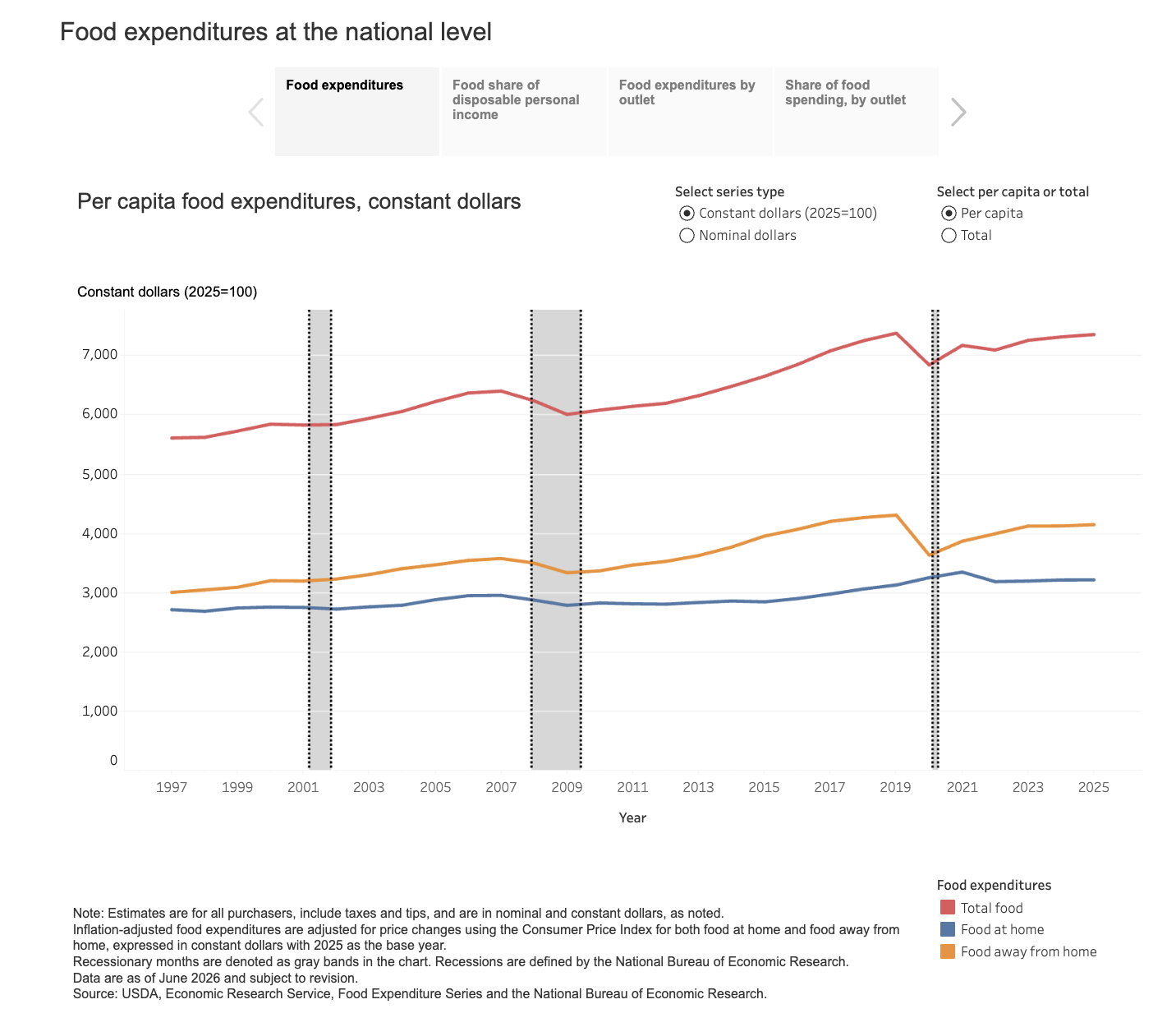
Out-of-home dining has rebounded since COVID, but inflation, labor costs, and tighter margins are raising costs for the foodservice sector in every part of the business. According to USDA’s Economic Research Data, in 2025 the average per capita spend on food away from home $4,381, compared to $3,207 at-home spend.
In this environment, customer loyalty and spending are top priorities for operators – and diners who choose plant-based options deliver both. GFI’s report notes that diners who order plant-based meat items visit restaurant chains nearly 50% more often than the average diner and they spend $500 more than the average diner–almost $2,000 a year–at those chains. Their checks run higher, too: when a visit includes a plant-based meat item, the average party check increases by more than two dollars. A compelling plant-based dish on the menu can grow the average ticket and build a more frequent, higher-spending customer base.
But the field is wide open. Only eight percent of the top 250 restaurant chains appeared to offer dishes with plant-based protein analogs on their menus in 2025, while just seven percent of chains offered only dishes with other plant-based proteins (e.g., grain/nut/veggie, tofu). Leaning into plant-based offerings is a way for businesses to stand out and win new customers as well.
The opportunity extends well beyond restaurants. At PBFI’s recent joint workshop with PPIC, Executive Director Sanah Baig made the case that institutional foodservice is one of the most under-leveraged growth channels for plant protein, with nearly 16 billion meals served annually in the U.S. across K-12, higher ed, hospitals, corrections, and the military. Closing the gaps in what foodservice operators have identified – delicious, functional plant proteins that meet price specifications – could unlock customer loyalty in noncommercial institutions that restaurants are already seeing.
Removing Surcharges and Using Plant-Based Defaults Grows Choice
Two operational changes are accelerating how often diners choose plant-based: pricing options the same as animal-based foods and making it the default.
The creamer category is a noteworthy example. In 2025, plant-based creamer held 28% pound share of the entire foodservice creamer category, hitting $189 million in roadline distributor foodservice dollar sales. This is a remarkable foothold built largely on the popularity of plant-based options in coffee and tea service. Plant-based milk has reached a 13% pound share of the total milk category in foodservice, up from 12% the year before. Both categories are still climbing: plant-based milk grew 16% in dollar sales in 2025, while creamer grew four percent, with both categories also posting strong pound-sales growth.
GFI's analysis points to major coffee chains that have eliminated plant-based surcharges and started offering plant-based milk as the default, changes that appear to be paying off in sustained category growth. Defaults can also cut costs. At New York City public hospitals, where flavor-forward plant-based meals were offered as the first two options to patients, 51% chose them and reported a 98% satisfaction rate. As journalist Michael Grunwald reported, the average plant-forward meal cost 59 cents less than the meat option, in total saving the city more than $1 million.
Connecting the Value Chain to Support Growing Plant-Based Demand
Scaling plant-based meat, eggs, and dairy across institutional and commercial foodservice means connecting the value chain partners who stand ready to meet domestic production needs. PBF’s role is to bring the evidence of consumer demand for more plant-based options into one shared conversation. We want a grower in the Midwest, an ingredient supplier, and a hospital foodservice director to be working from the same set of facts.
Many questions remain: How do we close the price gap between plant-based ingredients and their animal-based counterparts? How do we quantify the opportunity well enough to build producer trust in growing the necessary agricultural inputs? How do we keep pace with consumer expectations for the functionality and nutrition of plant-based foods? The data in GFI's new report shows where the underlying demand is already proving out, and where the next investment is most likely to pay off. Now we need to build the infrastructure to make sure it grows.
