
Field to Foodservice: Recap of PBFI & PPIC’s Workshop on Scaling Plant Protein
On May 21, PBFI joined forces with the University of Minnesota's Plant Protein Innovation Center (PPIC) to host Field to Foodservice: Plant Protein Innovation that Performs At Scale, a full-day workshop convening researchers, food and ingredient companies, foodservice professionals, farm groups, and school nutrition leaders. The conversation that unfolded made clear that getting more plants on plates at scale is a systems-level challenge that demands systems-level solutions.
Setting the Stage: The Opportunity for Plant Protein in Foodservice
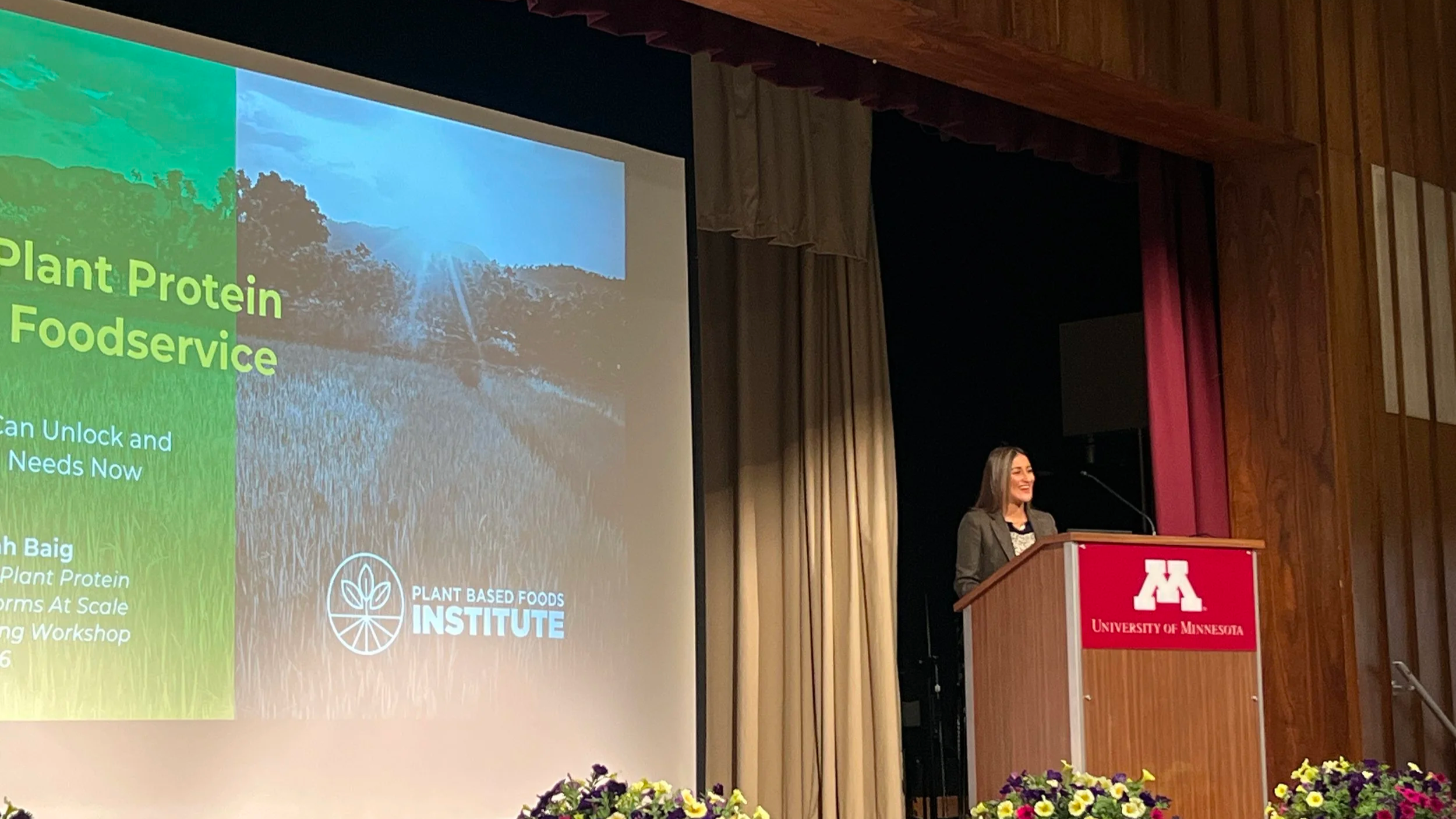
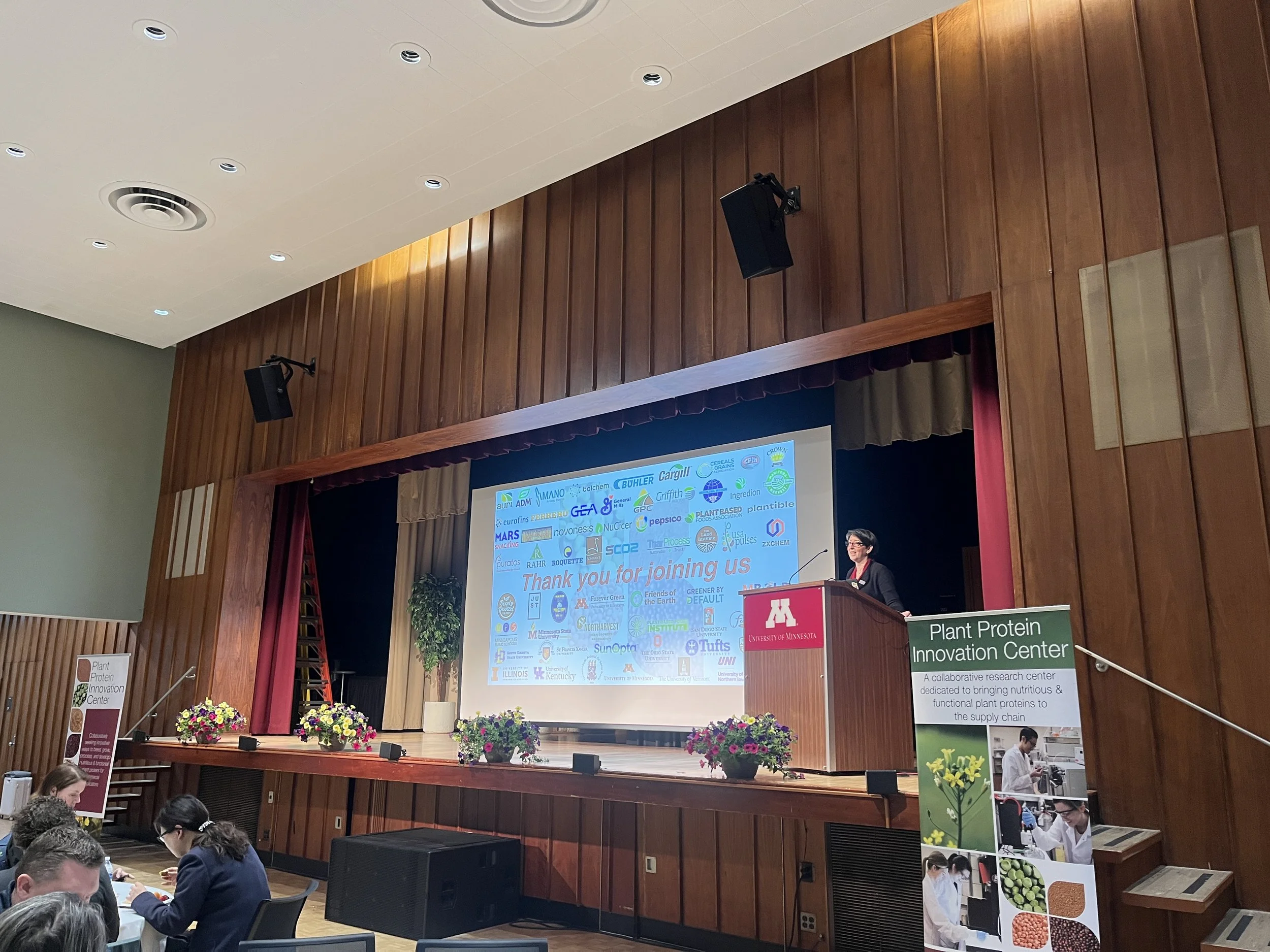
PBFI Executive Director Sanah Baig opened the workshop with a data-rich keynote that set the tone for the day's conversations. Retail sales of plant-based foods have reached $7.9 billion in the U.S., with 60% household penetration and 80% repeating purchases. Plant-based menu options in foodservice channels have tripled since 2018. And yet, institutional foodservice remains one of the most under-leveraged opportunities to grow the sector. Education, healthcare, corporate dining, correctional facilities, and the military collectively serve tens of billions of meals annually: 9.5 billion in K-12 alone, roughly 2 billion in higher education, 1.5 billion in hospitals, and more across corrections and the military.
Sanah also highlighted Minnesota's leadership position as a plant protein producer, home to approximately 22% of U.S. dry bean acreage and roughly 371 million bushels of soy production in 2025. While exports dominate, the Midwest region’s agricultural base is uniquely positioned to supply the institutional markets here at home. The keynote closed with a call to action: coordinate deliberately, share data openly, and invest in the "missing middle” pre-commercial scale-up and operator pilot work that no single actor can fund alone.
Plant-Based Procurement Strategies and Learnings
The workshop featured insights from chefs, scientists, ingredient companies, food manufacturers, and school food directors speaking to their experience incorporating more plant-based options in institutional settings.
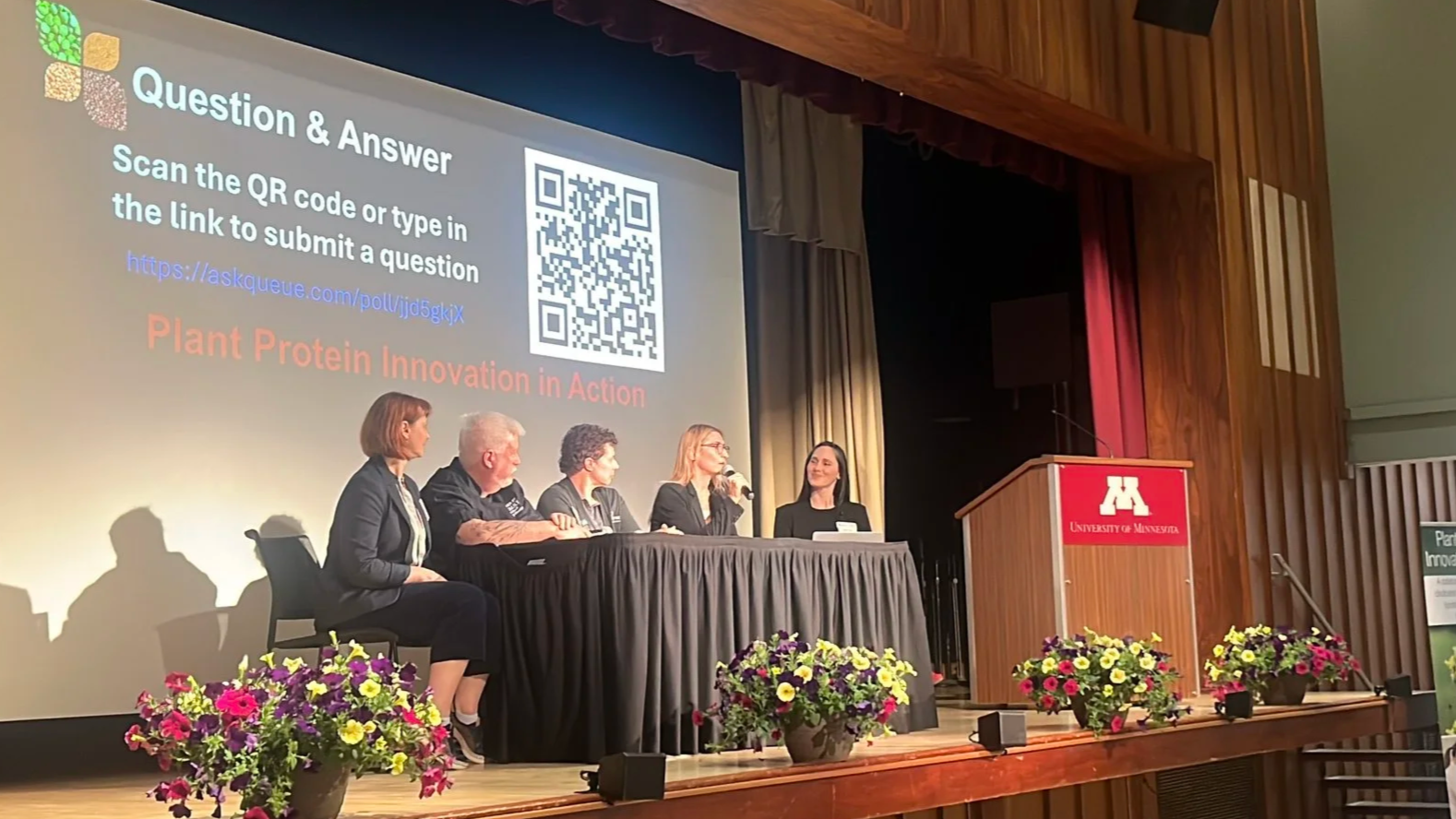
The morning panel, moderated by PBFI’s Maddie Segal, featured industry experts with direct experience in scaling plant proteins: Kent Buell (Greener by Default), Jenni Harrington (Bühler), Jennifer Kimmel (Roquette), and Kristie Middleton (Eat Just).
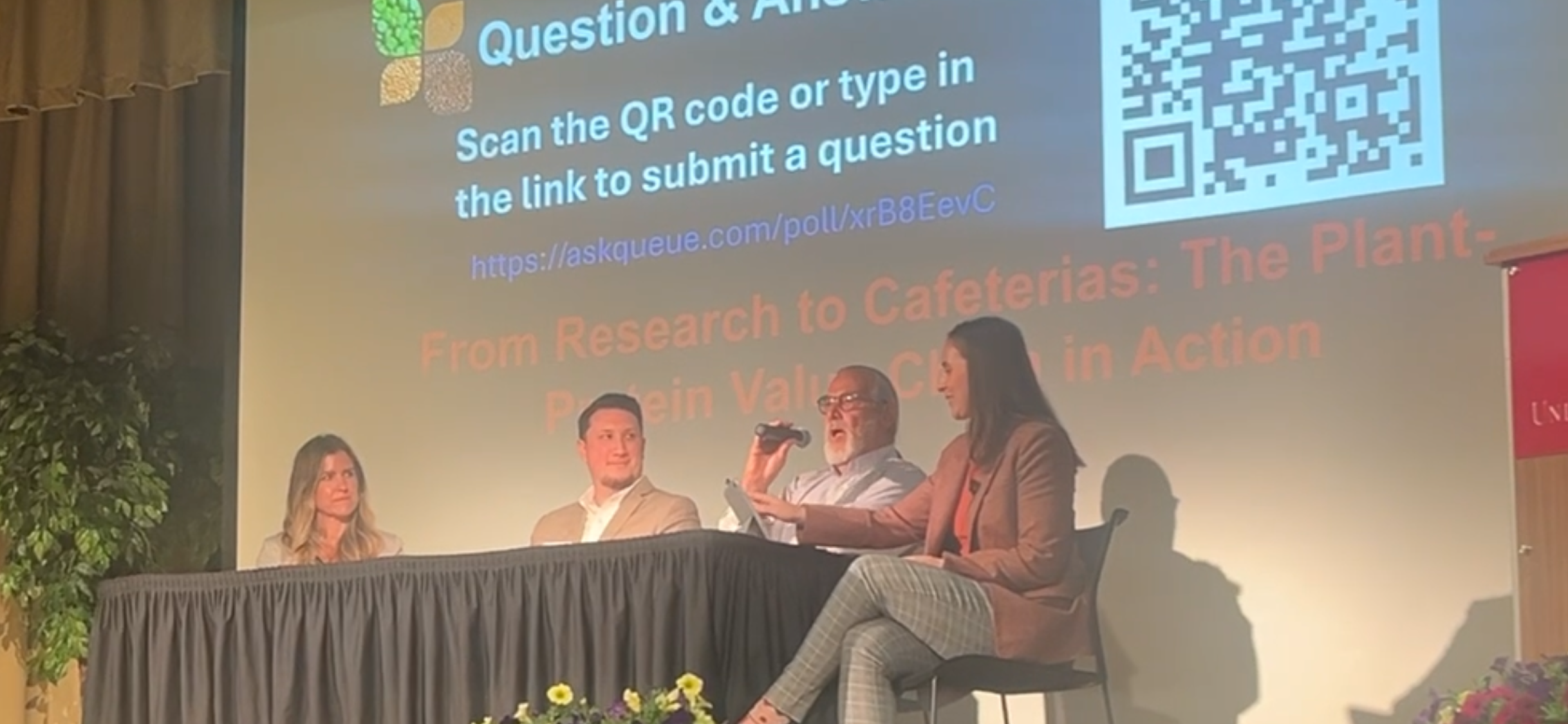
The afternoon panel, moderated by Chloe Waterman (Friends of the Earth), brought Kayla Beyer (Deeply Rooted), Bertrand Weber (former director of nutrition services at Minneapolis Public Schools), and Jacob Slabaugh (USA Pulses) into conversation about moving plant protein from research into cafeterias.
A few themes that came through the conversations:
"Good food first" beats taste-comparison framing: Plant protein options win when they lead with their own flavor, nutrition, and ingredient quality, rather than how closely they mimic an animal-based counterpart.
Research should solve operators' problems beyond taste alone: Understanding what problems operators are looking to solve, such as allergen-friendly options, clean labels, and prep efficiency, opens doors that flavor claims alone cannot.
Price parity is a near-term requirement, and formulation tradeoffs need to be solved upstream: Institutional budgets, especially in schools, are tight. Plant proteins must be cost-competitive on a per-serving basis. Meeting that bar while also delivering on taste, texture, and functional performance takes substantial R&D investment beyond food science alone. Plant breeders, ingredient scientists, and culinary professionals all have a role to play upstream.
Regional supply chains and "minimally processed" definitions both need to evolve: Despite the strength of farm-to-school programs, regionally-produced plant proteins that meet school food requirements face barriers with “minimally processed” definitions. In some cases, even chopped carrots don’t qualify against these standards. Building a workable framework could unlock more nutrient-dense, easy-to-prepare foods for institutional settings.
For more insights from these in-depth conversations, check out What Plant Proteins Do Foodservice Operators Want? 5 Insights From the Field and Why Plant Protein Isn't on the Lunch Tray and How to Fix That.
Into the Field and the Kitchen
The heart of the day came in two parallel breakout sessions that gave attendees the rare opportunity to move between the lab bench and the kitchen. Or in this case, between the field and the stove.
Forever Green Farm Tour
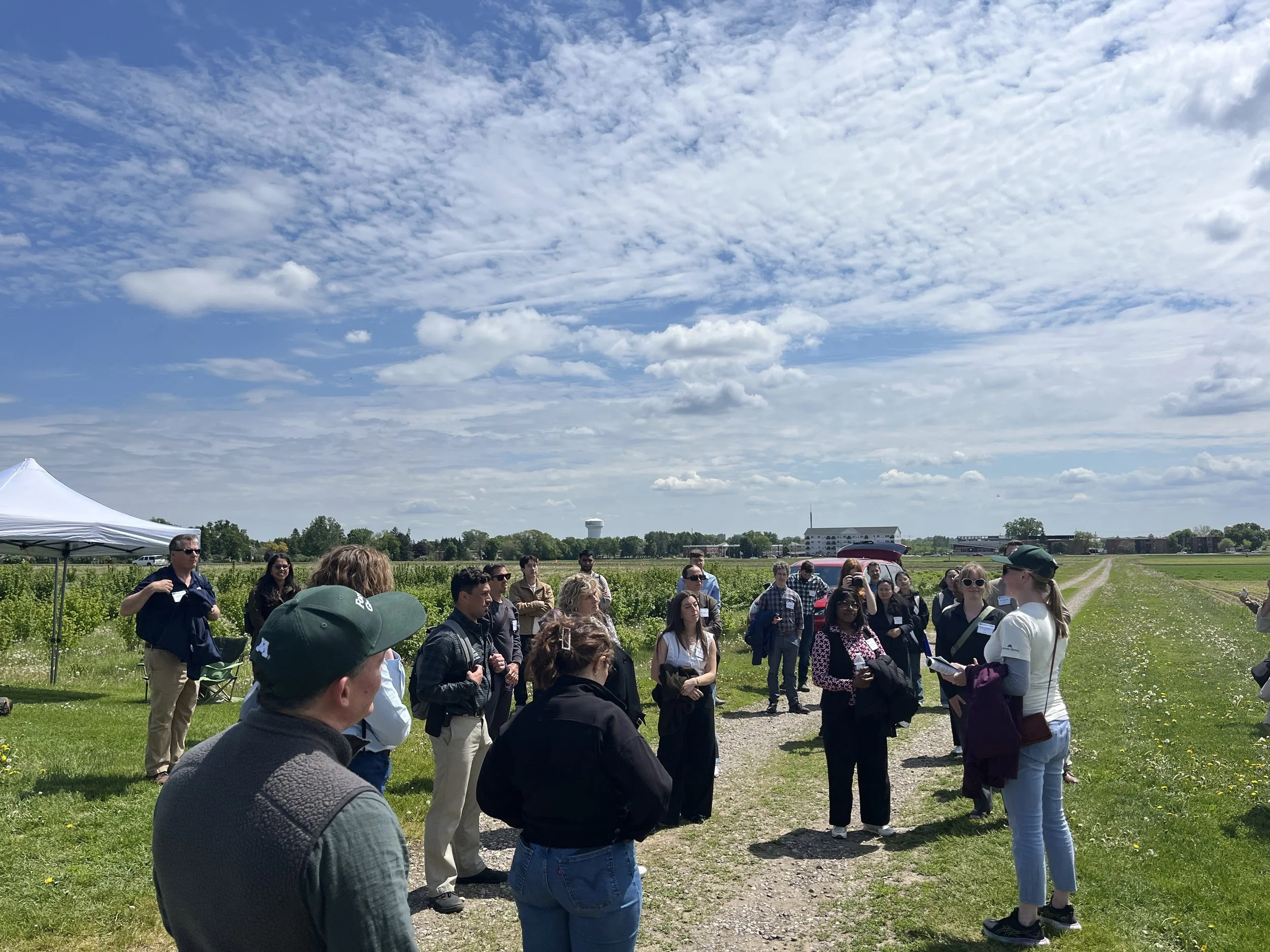
Led by the University of Minnesota's Forever Green Initiative, the field tour offered a firsthand look at the crops that could drive the next generation of regional plant protein production. UMN researchers shared how they were cultivating perennial and cover crops such as winter peas, camelina, pennycress, hazelnuts, and Kernza for both agronomic and nutritional performance. Participants came away with a deeper appreciation for the complexity of growing for food-grade quality specifications, and for the opportunity to develop an identity-preserved regional supply that commands a premium rather than competing solely on commodity price. Hazelnuts and Kernza were also on the table (literally), contributing to the day's recipe and tasting sessions.
Foodservice Test Kitchen
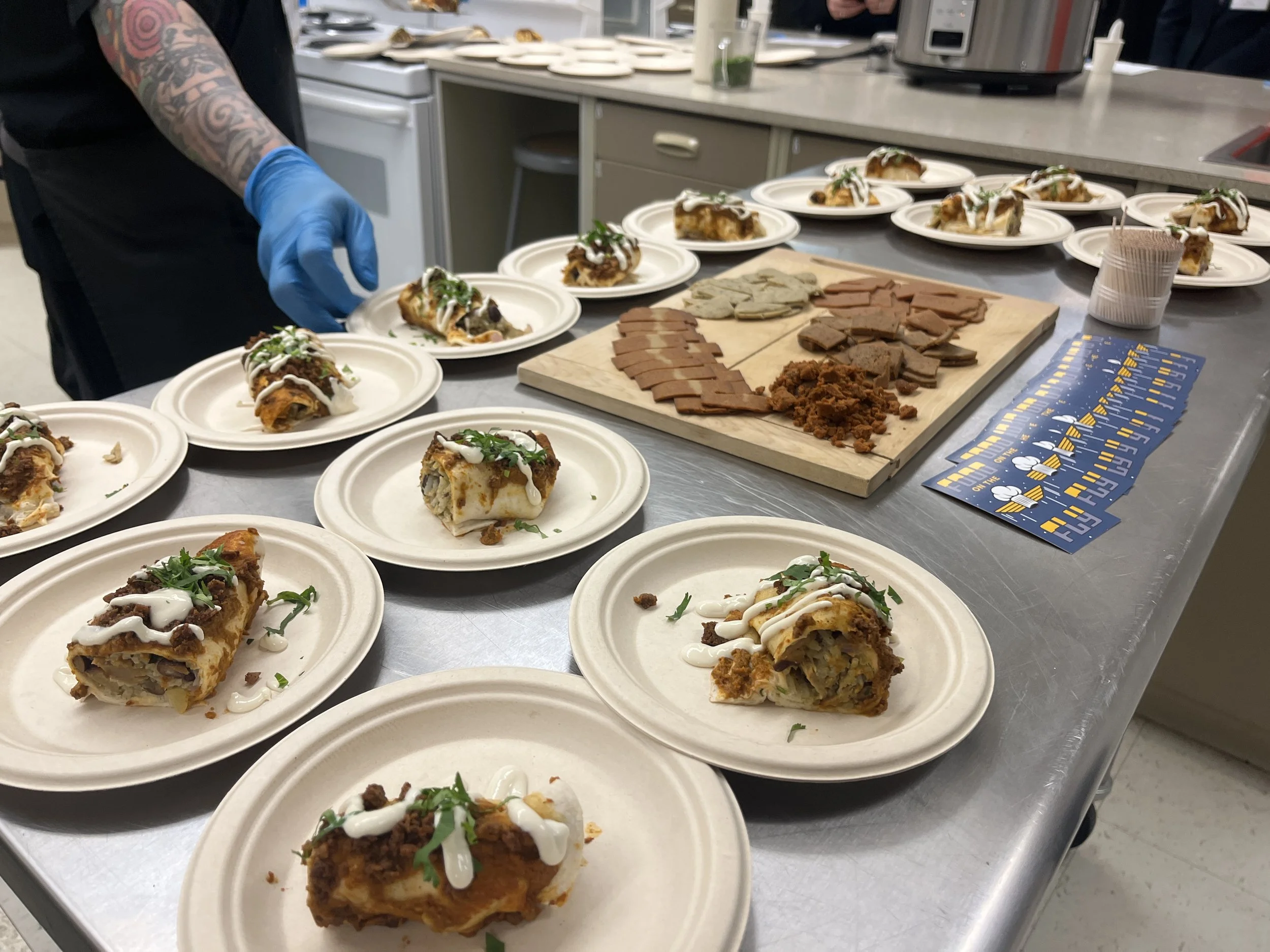
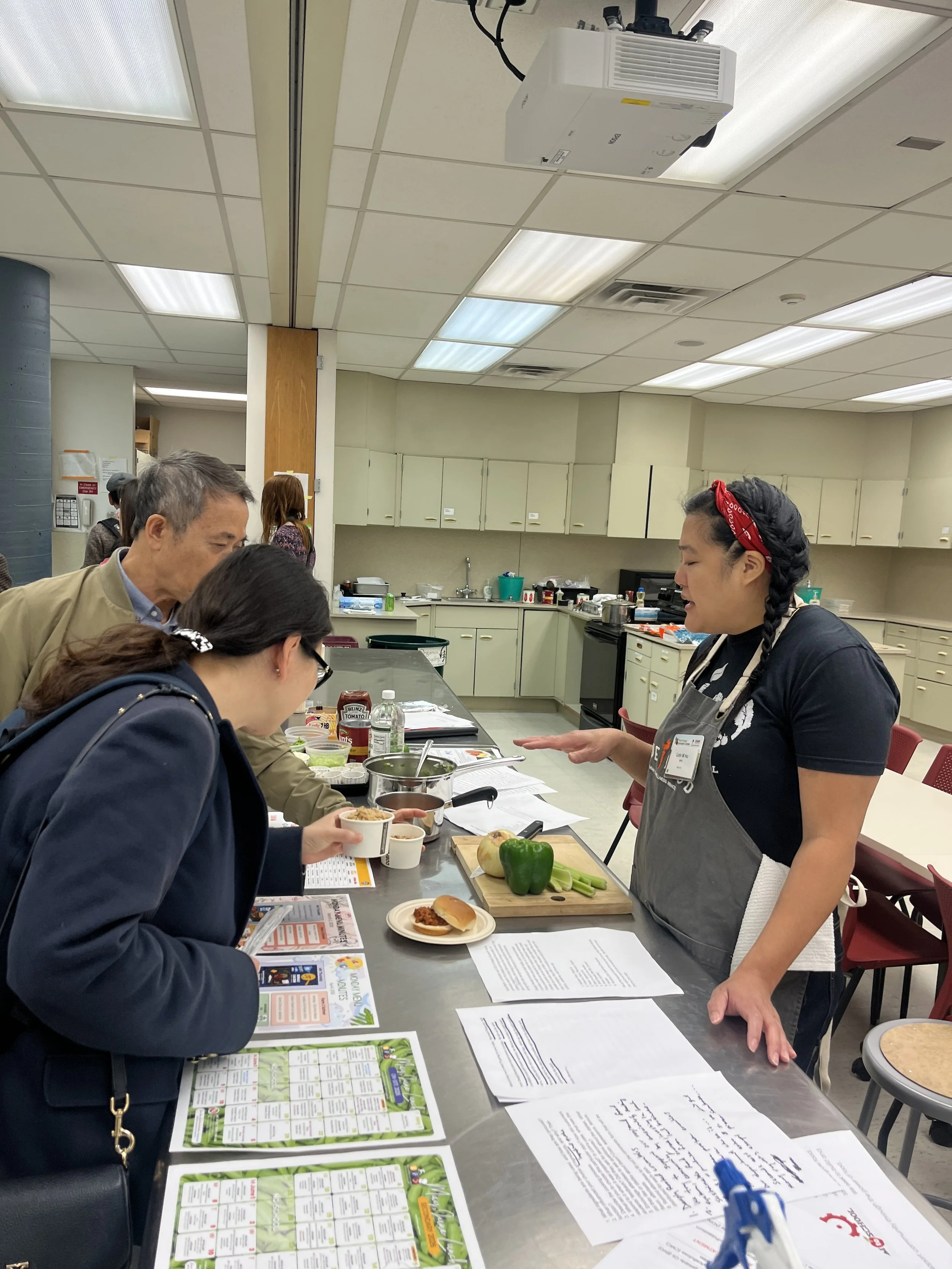
Featuring delicious meals from Samo Newman and Nate Stefanski from Food on the Fly and Linh Ho of Minneapolis Public Schools, the Foodservice Test Kitchen was a highlight that had attendees buzzing. Samo and Nate’s enchiladas featured housemade plant-based chicken and chorizo crumble, pineapple black beans, and a plant-based cilantro crema. Linh prepared delicious sloppy joes from the MPS menu, featuring pea protein from MN-based company Deeply Rooted.
The chef demos created a structured moment for honest dialogue between culinary professionals and the researchers and ingredient companies in the room. What performs on a school lunch line? What holds after 90 minutes in a steam table? What do kids actually choose and eat? Researchers saw how plant proteins perform in working kitchens, building connections between the work behind the scenes and the people it ultimately serves. The meals were so delicious that many attendees asked for seconds!
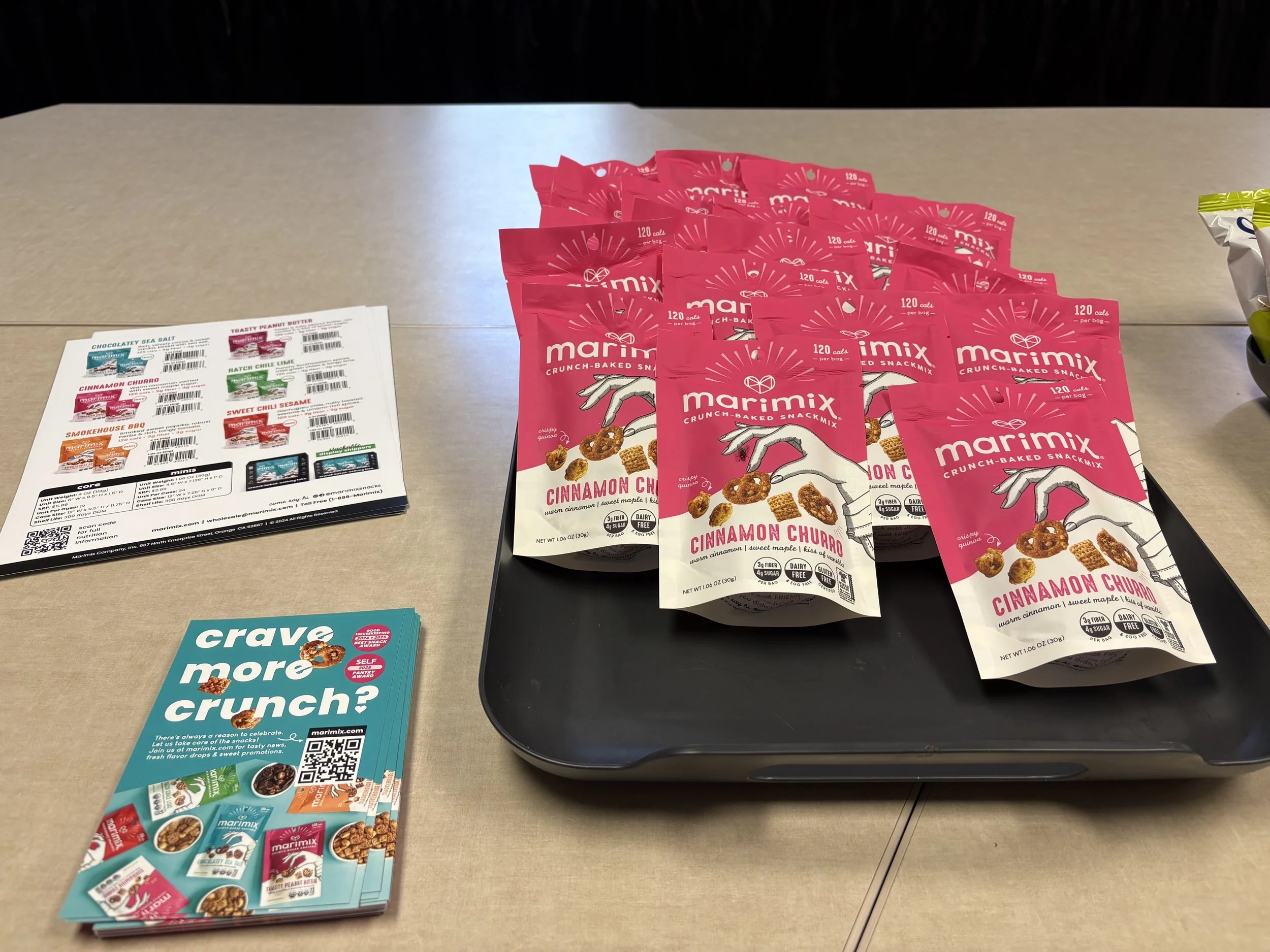
Lunch featured Eat Just’s chicken and snacks from Herbivorous Butcher, MariMix, and Seven Sundays, offering another opportunity to dig into craveable plant-based proteins before the afternoon sessions.
A Building Community
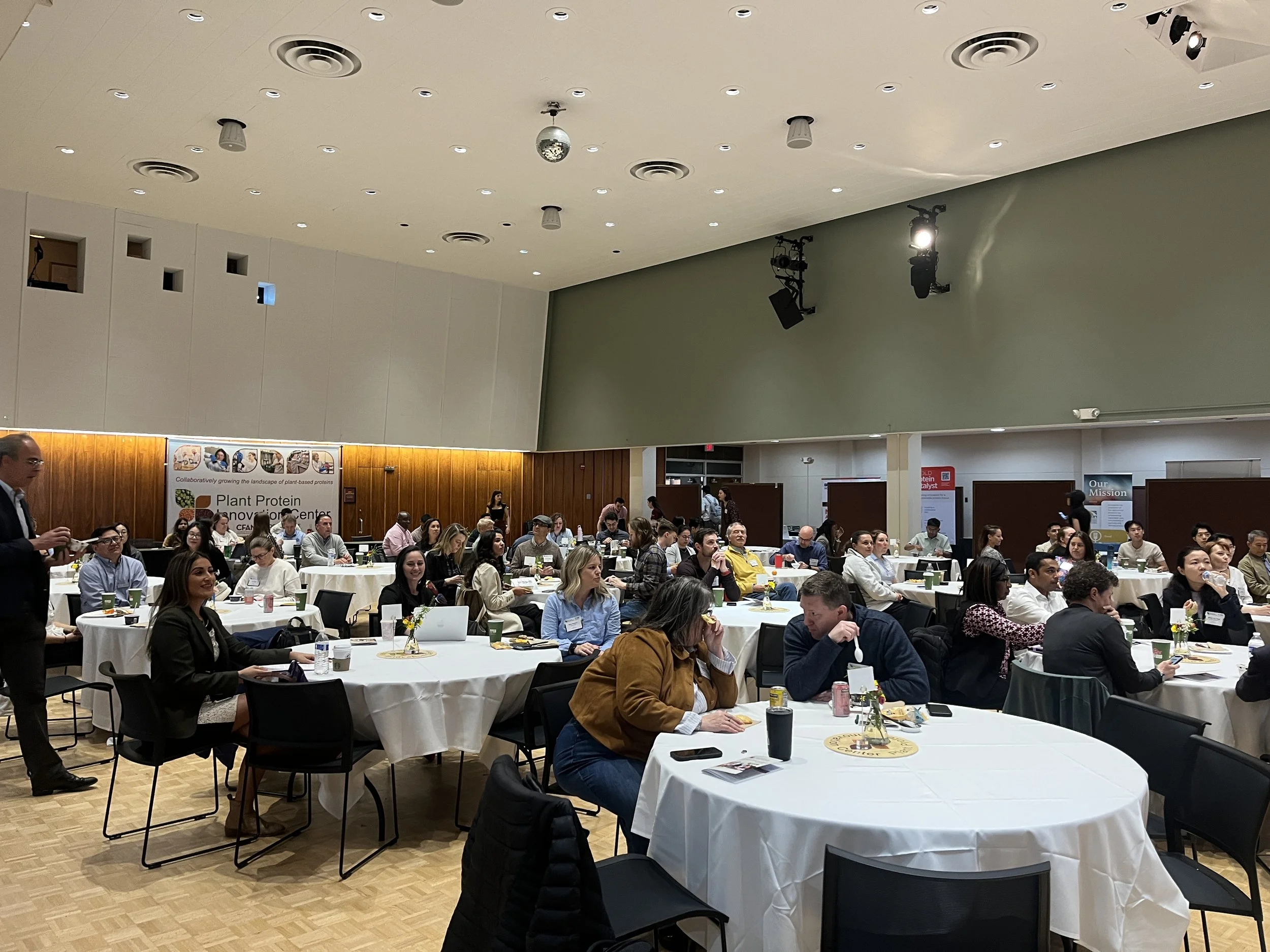
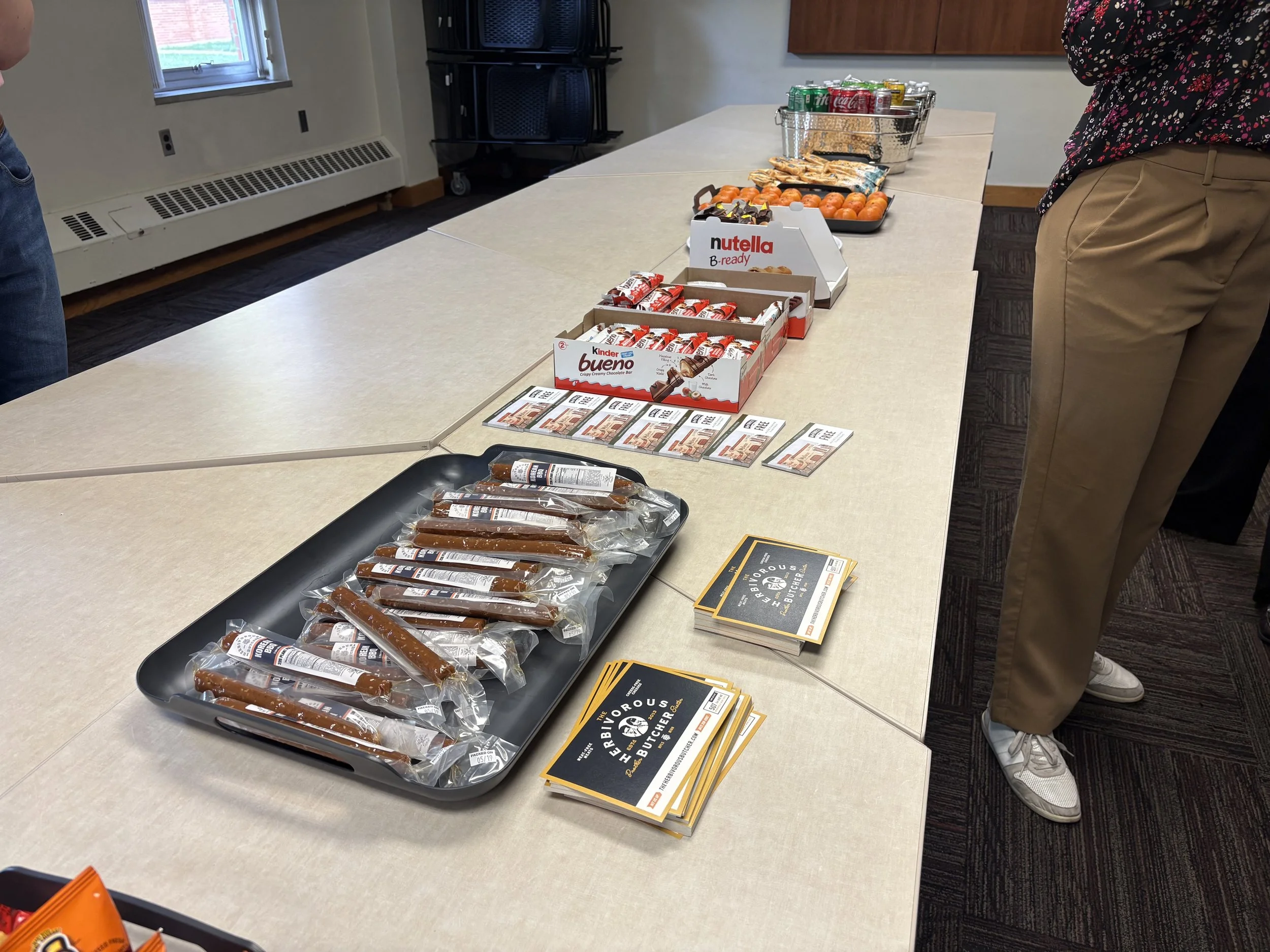
The day closed with a reception featuring plant-based bites, beverages, and coupons from MyForest foods, giving attendees space to continue making cross-sector connections.
PBFI's team came away from the day confident that bringing the agricultural research, ingredient innovation, and foodservice communities into the same room can accelerate progress. Sustained, coordinated work is needed across price parity, formulation consistency, supply reliability, culinary translation, and policy alignment. The will, the talent, and the resources to meet those challenges were all in the same room on May 21. That, more than any single breakthrough, is what gives us reason for optimism.
A Note of Gratitude
Crosscutting conversations like those at the event are rare. Deepest thanks to the University of Minnesota's Plant Protein Innovation Center, and especially to Dr. Pam Ismail and the entire PPIC team, for their partnership, their vision, and their extraordinary hospitality in co-hosting. The path to scaling plant-based foods isn’t paved by any single organization, crop, or technology. It is built through deliberate, multi-stakeholder coordination that workshops like this helped foster.
