
What Plant Proteins Do Foodservice Operators Want? 5 Insights From the Field to Foodservice Workshop
Foodservice operators evaluating plant proteins are asking a consistent set of questions: Does it perform in a high-volume kitchen? Does it fit existing menu formats and prep workflows? Is it price-competitive? Will staff and diners embrace it?
Those questions took center stage at Field to Foodservice: Plant Protein Innovation that Performs At Scale, a full-day workshop hosted by PBFI and the University of Minnesota's Plant Protein Innovation Center (PPIC) on May 21. The morning panel, Plant Protein Innovation in Action: How Agricultural and Processing Breakthroughs are Meeting Large-Scale Foodservice Demand, moderated by PBFI's Director of Industry Engagement Maddie Segal, brought together Kent Buell (Greener by Default), Jenni Harrington (Bühler), Jennifer Kimmel (Roquette), and Kristie Middleton (Eat Just), all working at the intersection of plant protein innovation and institutional foodservice.

5 Things Foodservice Operators are Looking For
1. Good Food First
The most successful plant-based proteins in institutional settings are pitched as “good food that happens to be plant-based”. Operators and procurement professionals are looking for craveable, reliable food that fits their menus, budgets, and prep flows. As a chef, Kent Buel shared that he looks for versatile and neutral flavor plant-based protein that can easily be adapted to the meals he’s already making and absorb the flavor as he cooks. Examples included a crumble that easily folds into lasagna, tacos, or chili – with an emphasis onproducts that aren’t looking to replicate the sensory experience of animal-based proteins but are delicious and functional in their own right. Expecting plant proteins to look and taste exactly like animal proteins puts those foods at an immediate disadvantage and sets up a perception gap that erodes trust when the comparison falls short.
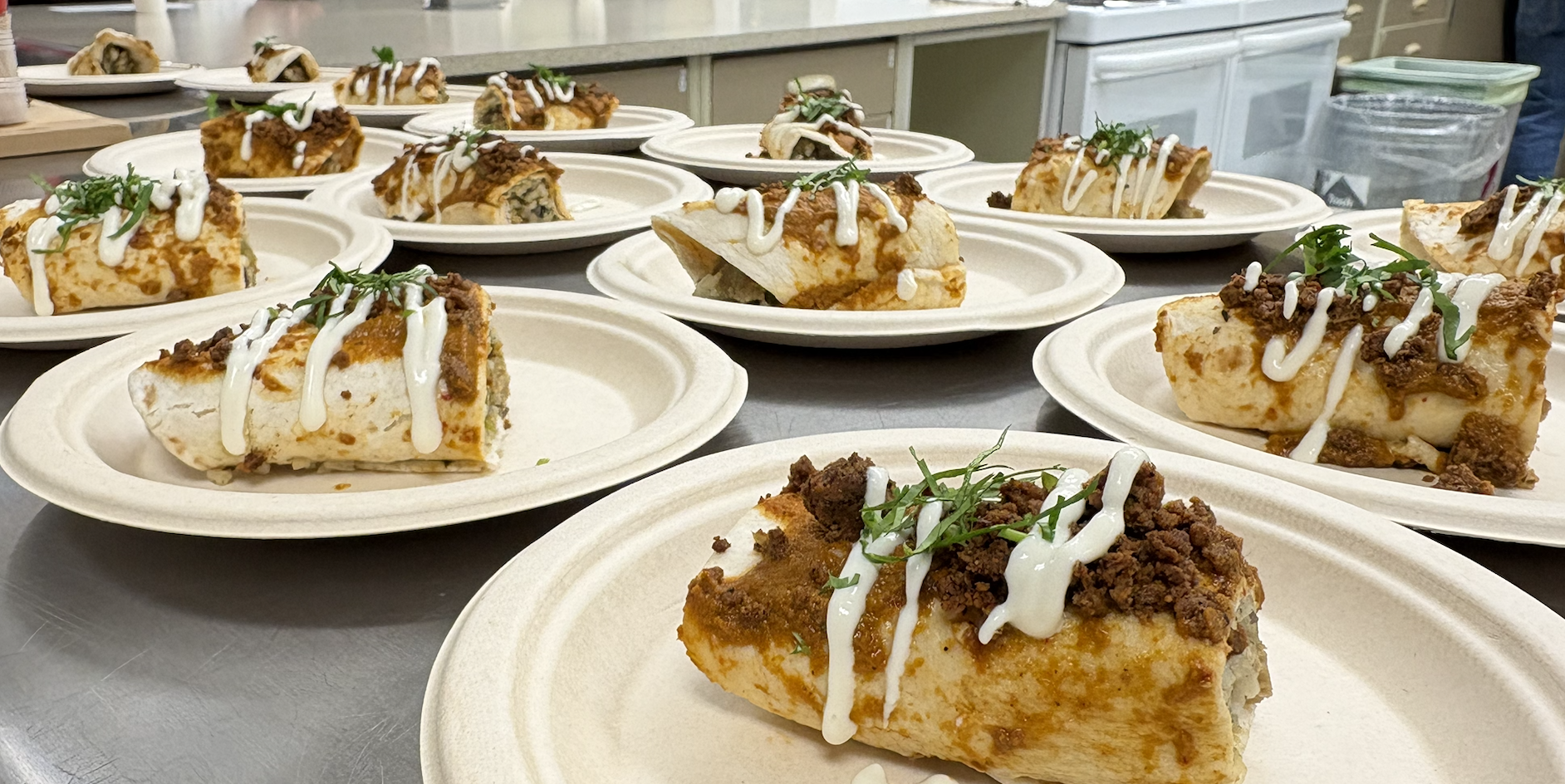
Food on the Fly’s Plant-Based Enchilada
2. The Allergen Opportunity
Eat Just's Kristie Middleton shared how JUST Egg broke through in institutional settings, especially schools, by meeting an operational need:” allergen-friendly protein. For schools and hospitals navigating complex dietary requirements, an egg alternative that is both clean-label and free of top allergens removes friction rather than adding it. This "solving the problem" framing proved more powerful than any taste-comparison claim.
3. Format Matters
Growing fatigue around the burger patty as the default plant protein format opened space for other formats with momentum. The panel highlighted chorizo-style crumbles, tenders, strips, and breakfast patties as formats that fit naturally into how institutional kitchens already cook. Neutral, shelf-stable formats also drew significant attention because easy 1-1 substitutions that store at ambient temperatures are operational gold in high-volume settings.
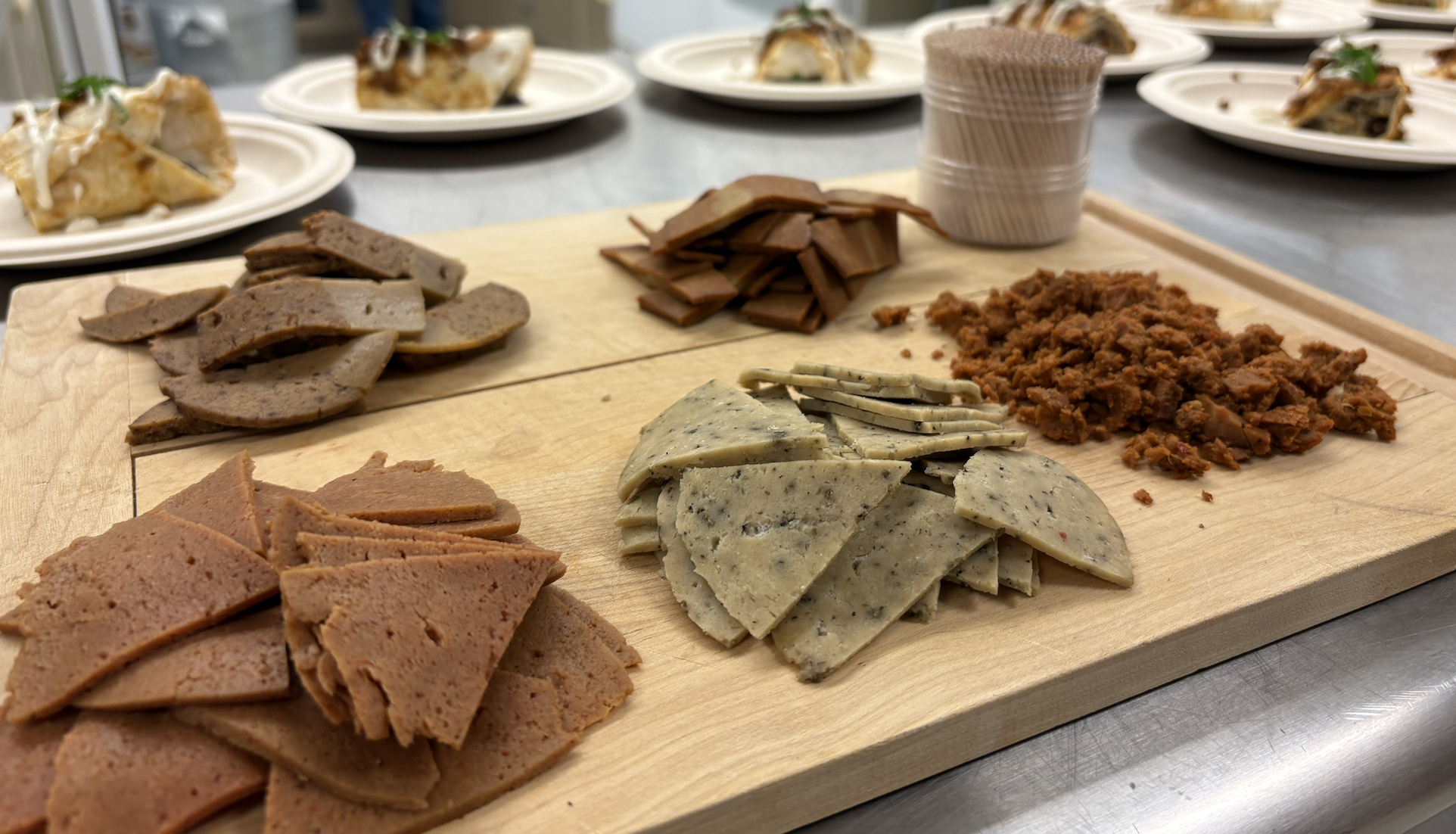
Food on the Fly’s Plant-Based Deli Slices, Bacon, and Chorizo Crumbles
4. Shifting Protein Profiles with Blends
More research is needed, but several panelists noted that blending plant protein into animal-based meat is an underexplored middle path that could meaningfully accelerate plant protein adoption. Blended products allow operators to introduce plant proteins without a full menu change, smooth commodity price fluctuations, and pave the way for wider consumer adoption of plant proteins. Jenni Harrington shared that Bühler was paying attention to fermented protein ingredients because they deliver improved taste profiles alongside functional benefits.
5. Price Parity is Non-Negotiable
The economics of plant protein at scale remain a persistent challenge, but panelists were clear that price parity is a near-term requirement and the path there runs through formulation efficiency, ingredient consistency, and supply chain maturity.
